'%3e%3cpath%20d='M72%200H0V72H72V0Z'%20fill='%23D81E04'/%3e%3cpath%20d='M16.656%2048.9837C13.5894%2048.9837%2011.0957%2051.4736%2011.0957%2054.5308C11.0957%2057.5879%2013.5875%2060.0797%2016.656%2060.0797C19.7244%2060.0797%2022.1917%2057.5784%2022.1917%2054.5308C22.1917%2051.4831%2019.6999%2048.9837%2016.656%2048.9837ZM16.656%2056.7087C15.4498%2056.7087%2014.4667%2055.7294%2014.4667%2054.5308C14.4667%2053.3321%2015.4498%2052.3528%2016.656%2052.3528C17.8622%2052.3528%2018.8302%2053.3321%2018.8302%2054.5308C18.8302%2055.7294%2017.8376%2056.7087%2016.656%2056.7087ZM54.0881%2049.2446H50.8306V59.7961H54.1335V55.8863C54.1335%2055.4609%2054.1297%2054.9013%2054.0257%2054.2226L57.6349%2059.798H60.9056V49.2465H57.6046V53.0088C57.6046%2053.4664%2057.6179%2054.0241%2057.7143%2054.6877L54.0881%2049.2465V49.2446ZM43.5404%2023.2733L48.628%2028.361C50.7852%2030.5068%2054.7668%2030.798%2057.3381%2028.2456L48.5184%2019.426L47.9758%2018.8871C45.8186%2016.7394%2042.9297%2015.5332%2039.8859%2015.5332H31.6485C28.0393%2015.5332%2024.9576%2018.1895%2024.4623%2021.7571H39.8915C41.266%2021.7571%2042.5724%2022.294%2043.5404%2023.2715V23.2733ZM32.4879%2024.3397C32.4879%2025.9977%2033.8359%2027.3457%2035.494%2027.3457C37.1521%2027.3457%2038.5001%2025.9996%2038.5001%2024.3397C38.5001%2023.8008%2038.3583%2023.2658%2038.0728%2022.7969H32.9057C32.6335%2023.2658%2032.4879%2023.8008%2032.4879%2024.3397ZM33.6979%2049.2446V59.7961H40.6988V56.928H37.3789V49.2465H33.6979V49.2446ZM21.2577%2029.0208H24.2354C25.2998%2029.0208%2026.3869%2029.4727%2027.1507%2030.2289L41.249%2044.3309C43.6784%2041.9147%2043.6784%2037.9293%2041.249%2035.5094L31.6315%2025.8899C29.6671%2023.9199%2027.0373%2022.7969%2024.2619%2022.7969H23.3582C19.9078%2022.7969%2017.1267%2025.5875%2017.1267%2029.0359C17.1267%2030.382%2017.5275%2031.4181%2018.2119%2032.5581C17.9605%2030.7167%2019.3917%2029.0208%2021.2558%2029.0208H21.2577ZM45.2344%2055.6008H47.4634V53.1525H45.2344V51.8215H49.3597V49.2427H41.8332V59.7942H49.6981V56.9262H45.2344V55.6008ZM29.8505%2055.4969C31.0397%2055.357%2031.8262%2054.3096%2031.8262%2052.8027C31.8262%2050.5473%2030.4158%2049.2446%2027.6801%2049.2446H23.3639V59.7961H26.6667V56.3079L28.459%2059.7961H32.5919L29.8505%2055.4969ZM27.3039%2054.1451H26.6667V51.8518H27.3039C28.1074%2051.8518%2028.5233%2052.2998%2028.5233%2053.0202C28.5233%2053.7405%2028.0866%2054.1451%2027.3039%2054.1451Z'%20fill='white'/%3e%3c/g%3e%3cdefs%3e%3cclipPath%20id='clip0_477_203'%3e%3crect%20width='72'%20height='72'%20fill='white'/%3e%3c/clipPath%3e%3c/defs%3e%3c/svg%3e)
- Home
- Sustainability Statement
- Environment and Climate
- Biodiversity and Ecosystems [ESRS E4]
Biodiversity and Ecosystems [ESRS E4]
As part of our investment activities, we carry out projects that are likely to have a significant impact on the environment, and therefore their implementation requires an environmental decision. Such decisions are based on an environmental impact analysis prepared either in the form of a Project Information Sheet or an Environmental Impact Assessment Report, which includes an assessment of the project’s impact on local biodiversity and ecosystems.
The authority conducting the proceedings (the commune head, the city mayor, or the Regional Directorate for Environmental Protection specifies the conditions for the project or decides whether a full environmental impact assessment (EIA) is required, based on the Project Information Sheet and the opinions of other institutions. For projects that are always likely to have a significant impact on the environment, or where the authority considers it necessary, an Environmental Impact Assessment Report must be prepared and the decision-making procedure must include public participation.
ORLEN Group companies are required to comply with the conditions set out in environmental decisions, including by applying measures to limit potential negative impacts during project construction, operation and, where required, after its decommissioning.
[E4.IRO-1]
Our material biodiversity- and ecosystem-related impacts, dependencies and related risks and opportunities arise primarily from the nature of our operations and capital investments in the Upstream & Supply, Downstream and Energy segments, and, to a lesser extent and in a more dispersed manner, also in the Consumers & Products segment. Our business model includes the production of hydrocarbons, refining and petrochemical operations, the generation and distribution of electricity and gas, as well as an extensive retail network.
In these areas, we identify impacts primarily related to greenhouse gas emissions and other pollution, land-use change, and the potential impact of our projects on areas of high natural value. Our dependencies and main physical risks relate mainly to ecosystem services that support operational continuity and the implementation of investment projects, including the availability and quality of surface water and groundwater, the protective functions of ecosystems such as flood mitigation, soil erosion control and climate regulation, and, for selected assets, the availability of biomass.
These are most concentrated in our own hydrocarbon production, energy generation and infrastructure assets, where exposure is linked to asset location, land and water requirements, and the potential impact of projects and operations on ecosystem health. Additional exposure arises in the Consumers & Products segment due to the scale and geographic spread of our retail network, including sites located near protected areas.
Our opportunities are primarily linked to the development of low- and zero-carbon products and services with a lower impact on biodiversity, as well as to reducing water withdrawal through closedloop systems and nature-based solutions.
In 2025, biodiversity was not a separate category within our Corporate Risk Management System; in practice, it was addressed in part through the environmental, climate and transition risks included in the system.
Double materiality assessment summary for biodiversity and ecosystems [E4.IRO-1]
| Segment | Area | Geographical region | E4 Risk, opportunity, impact name | Impact (I) Risk (R) Opportunity (O) | Positive (+) Negative (-) | Actual (A) Potential (P) | Value chain Organisation (O) Downstream (D) Upstream (U) |
|---|---|---|---|---|---|---|---|
|
Upstream & Supply, Downstream, Energy, Consumer & Products, Corporate Functions |
Refining; Upstream; Energy; Petrochemicals; Gas; Retail; Corporate Functions | Globally | Climate change as a direct driver of biodiversity loss Greenhouse gas emissions from operations affecting biodiversity and ecosystem health | I | - | A, P | O, D, U |
| Development of new business segments and business lines with a portfolio of low- and zero-carbon products and services | O | O, D, U | |||||
| Rising costs of measures that support greenhouse gas emissions reduction, including investments in low- and zero-carbon energy sources | R | O, D, U | |||||
|
Upstream & Supply, Downstream, Energy, Consumer & Products |
Refining; Upstream; Energy; Petrochemicals; Gas; Retail | Globally |
Land-use change, freshwater-use change and sea-use change as direct drivers of biodiversity loss
Transformation of land and water in connection with operations leading to habitat loss | I | - | A, P | O, U |
| Unplanned spending to mitigate negative impacts on biodiversity | R | O, U | |||||
| Energy | Power Generation | Poland | Direct exploitation as a direct driver of biodiversity loss* | I | - | A | O |
|
Upstream & Supply, Downstream, Energy, Consumer & Products, Corporate Functions |
Refining; Upstream; Energy; Petrochemicals; Gas; Retail; Corporate Functions | Globally | Pollution as a direct driver of biodiversity loss Pollution from operations affecting biodiversity and ecosystem health | I | - | A, P | O, D, U |
| Energy | Power Generation | Poland | Impacts on the state of species* Impact on the size of local species populations | I | - | A, P | O, D, U |
|
Upstream & Supply, Downstream, Energy, Consumer & Products Corporate Functions |
Refining; Upstream; Energy; Petrochemicals; Gas; Retail; Corporate Functions | Europe | Impacts on the extent and condition of ecosystems Costs of measures to protect ecosystems and prevent land degradation | R | O, U | ||
| Impacts and dependencies on ecosystem services Impacts and dependencies of the Group’s operations on ecosystem services | I | - | A, P | O, D, U | |||
| Reducing the water intensity of processes | O | O, D, U | |||||
| Costs of adaptation where ecosystem services are not available | R | O, D, U |
| short-term | medium-term | long-term | |||||
|---|---|---|---|---|---|---|---|
| Climate change as a direct driver of biodiversity loss | R O | ✔ ✔ | ✔ ✔ | ✔ ✔ | |||
| Land-use change, freshwater-use change and sea-use change as direct drivers of biodiversity loss | R | ✔ | ✔ | ✔ | |||
| Impacts on the extent and condition of ecosystems due to land degradation | R | ✔ | ✔ | ||||
| Impacts on the extent and condition of ecosystems due to land degradation | R | ✔ | ✔ | ||||
| Impacts and dependencies on ecosystem services | O R | ✔ | ✔ ✔ |
We have conducted the double materiality assessment for biodiversity on the basis of expert knowledge, supported by the GBS®, ENCORE and WWF Biodiversity Risk Filter tools, as well as the risk and opportunity register developed by the Taskforce on Nature-related Financial Disclosures (TNFD) as part of the Biodiversity Action Plan project. Since appropriate tools are not currently available, the assessment did not take into account systemic risks.
Within the ORLEN Group, only the ENERGA Group identified local impacts on species, including impacts on the population size of individual species and direct exploitation as a direct driver of biodiversity loss. These impacts relate to small hydropower plants, whose operation may restrict the migration of migratory fish species and affect local populations of aquatic species, as well as to wind farms and power line infrastructure, where there is a risk of bird and bat collisions. The impacts are local in nature and limited to selected sites of ENERGA Group companies. Detailed information on these impacts is provided in the ENERGA Group’s report.
Transition plan and consideration of biodiversity and ecosystems in strategy and business model [E4-1]
The impacts, dependencies, risks and opportunities related to biodiversity and ecosystems do not constitute a direct factor determining the ORLEN Group’s business model; therefore, no resilience analysis was conducted. Nevertheless, their materiality is becoming increasingly evident, for instance because of their significant influence on the way new projects are designed and implemented and on the conditions for operating existing assets. These matters are addressed in the ORLEN Group Biodiversity Policy published in 2023, which includes commitments to preserve and promote biodiversity when developing new projects and to take measures to foster biodiversity in areas where we already operate and in their immediate vicinity.
Recognising the growing importance of the interaction between biodiversity and ecosystem protection and business activities, we have incorporated these issues as an integral part of the ORLEN Group Sustainable Development Strategy for 2025–2035, under the Environment and Biodiversity Protection pillar, which supports the long-term business objectives of the ORLEN 2035 Strategy.
The Biodiversity Transition Plan was not adopted in 2025. In 2026, we plan to adopt the ORLEN Group Biodiversity Action Plan to 2030 (BAP). It will set out the directions for managing our impacts and dependencies on nature, organise priorities, define high-level and detailed objectives, and identify initiatives that can be implemented across our multi-segment organisational structure.
[E4.SBM-3]
Our operations may potentially affect biodiversity and ecosystems, in particular by generating pressures through climate change, pollution and land use. These identified environmental pressures are presented in the section on the double materiality assessment. At this stage, our impacts on biodiversity and ecosystems are identified primarily at the level of individual projects, at their planning and operational stages, on the basis of environmental impact assessment procedures, environmental decisions and other environmental regulations applicable in the countries where we operate.
Some of our assets are located in or near biodiversity-sensitive areas. The number of our sites interfacing with such locations is presented in Tables 89 and 91. While some operations may potentially affect biodiversity and ecosystems, the location of assets alone does not in itself determine the existence of a material impact. We assess potential impacts and, where appropriate data are available, actual impacts primarily at the level of specific projects and locations, taking into account environmental baseline studies, environmental impact assessment procedures, environmental decisions and other locally applicable regulatory requirements. As a result, the need to apply avoidance and mitigation measures and, where justified, also restoration or compensation measures, is identified primarily in relation to specific projects and local conditions.
Alongside the work carried out at the ORLEN Group level, key sites from the perspective of location in or near biodiversity-sensitive areas and the potential impact of our activities were also identified individually by selected Group companies, based on their own analyses, environmental baseline studies and environmental documentation. The sites are presented in the table below. This information will be further verified and possibly expanded once the assessments carried out as part of the Biodiversity Action Plan at the Group level have been completed.
As part of the implementation of the Biodiversity Action Plan, we plan a systematic assessment of all Group companies, covering both the identification of potential impacts and the verification of actual impacts at specific locations. These analyses are scheduled to begin in 2026.
Location in or near biodiversity-sensitive areas and measures taken by the ORLEN Group
| Company | Site Location | Location in or near biodiversity-sensitive areas and measures taken |
|---|---|---|
| ORLEN S.A. | Production plant in Płock |
|
| Production plant in Włocławek |
| |
| Service stations and fuel terminals |
| |
| ORLEN New Power | Wind and solar PV farms of 11 subsidiaries |
|
| ORLEN Aviation | Aviation fuel storage and refuelling services within or adjacent to airport areas (transformed land) |
|
| ORLEN Budonaft | Office building, production floor, paint shop in Limanowa |
|
| ORLEN Neptun | Świnoujście Offshore Terminal |
|
| ORLEN Termika S.A. |
Żerań CHP plant and decommissioned Myśliborska combustion waste landfill,
Siekierki CHP plant and decommissioned Zawady combustion waste landfill, Pruszków CHP plant, Kawęczyn heat plant, Wola heat plant. |
|
| Polska Spółka Gazownictwa | Construction of the DN150, MOP 6.3 MPa high-pressure gas distribution pipeline as part of the project to construct the Otmuchów–Paczków section the Lewin Brzeski–Paczków high-pressure gas pipeline; location: municipalities of Otmuchów and Paczków, Province of Opole. |
|
| Other locations |
| |
| ORLEN Południe |
Trzebinia plant;
Jedlicze plant; Kętrzyn rapeseed oil pressing plant (under construction) |
|
| PGNiG Branch Complex | Five investment projects |
|
| ANWIL S.A. | Włocławek plant |
|
| Rafineria Gdańska | Rafineria Gdańska |
|
Public consultations on biodiversity
In the case of projects likely to have a significant impact on the environment, local communities are involved in public consultations as part of the administrative environmental impact assessment procedures. The consultation process includes public notices and announcements published in the Public Information Bulletin (BIP), meetings, and the collection of feedback and objections through the relevant Municipal Offices in the areas where the projects are located.
In addition to complying with these formal requirements, in 2025 we undertook further community dialogue activities. For instance, in connection with the New Chemistry project such initiatives included:
- a dedicated contact form available on the project’s website for submitting questions and complaints regarding the project; questions and complaints can also be sent by post;
- publication of two reports on the project’s website: the Stakeholder Engagement Plan for the New Chemistry Project and the Human Rights Impact Assessment;
- official stock exchange announcements, including announcement of the New Strategy ORLEN 2035 Regarding the New Chemistry Project and Results for Q1 2025 – communication of progress on the New Chemistry project, as well as related press conferences;
- ongoing communication in local media and on social media;
- implementation of the ORLEN as a Good Neighbour project promoting local initiatives in the municipality of Stara Biała.
Policies related to biodiversity and ecosystems [E4-2]
Biodiversity and ecosystem policies adopted by the ORLEN Group and material biodiversity- and ecosystem-related topics
The ORLEN Group Biodiversity Policy is the key document setting the framework for the management of biodiversity- and ecosystem-related matters across the Group.
It outlines the main commitments, principles and directions adopted by Group companies in response to identified environmental impacts, supporting the gradual integration of biodiversity protection into our operating and investment activities. The Policy was developed in connection with the double materiality assessment, which included stakeholder dialogue. Furthermore, the Policy requires Group companies, at various operational levels, to review the biodiversity conservation measures already in place and to plan and implement further improvement initiatives, particularly in areas that are environmentally sensitive or demonstrate high natural value.
The Climate and Sustainability Council is the most senior body accountable for the implementation of the Policy. The document was developed with reference to the EU Biodiversity Strategy for 2030, the EU Taxonomy and the Sustainable Development Goals of the 2030 Agenda.
The overarching objectives set out in the ORLEN Group Biodiversity Policy are to:
- preserve and promote biodiversity by establishing new projects to enable sustainable coexistence with, preservation and conservation of, and support for natural heritage,
- take measures to foster biodiversity in and adjacent to the existing operation sites,
- foster a societal culture of biodiversity protection focused on raising stakeholder awareness.
In addition, the Biodiversity Policy provides for the following:
- integrating biodiversity protection into the ORLEN Group’s internal strategic and decision-making processes;
- incorporating biodiversity into the list of environmental aspects analysed within the operated environmental management systems;
- applying the mitigation hierarchy: avoidance, minimisation, restoration and compensation at all stages of strategic infrastructure projects in order to minimise the impact of new infrastructure on biodiversity;
- avoiding the siting of new infrastructure projects in protected areas, thereby preserving their natural value;
- compensating for the ORLEN Group’s operational impacts through remediation and restoration of ecosystems, as well as additional biodiversity-supporting measures;
- protecting species and natural habitats through proactive conservation management, actions for their benefit, research on species distribution, and, where necessary, assessment of ecosystem services in cooperation with external experts;
- implementing nature-based solutions, including with the use of digital tools;
- raising awareness, providing training and engaging ORLEN Group employees and partner entities in biodiversity initiatives;
- participating in research, educational and awareness-raising projects in cooperation with government agencies, non-governmental organisations, local communities and other stakeholders;
- regularly communicating the ORLEN Group’s biodiversity-related actions (information on protected areas, and research, conservation and environmental education activities, etc.), and publishing periodic biodiversity reports.
The ORLEN Group Biodiversity Policy is available at www.orlen.pl.
The ORLEN Group Biodiversity Policy serves as the overarching framework at Group level. It is implemented by Group companies, in particular through environmental and QHSE management systems, investment procedures, and compliance with administrative decisions, with each company adapting its implementation to its business profile, the characteristics of its assets, and the scale of its potential impacts on biodiversity. The companies listed below supplement the Policy with additional measures, documents and procedures, and have decided to provide more detailed disclosures in this respect.
- Actions taken at ORLEN Neptun, which develops strategic infrastructure and investment projects, included incorporating environmental requirements into contracts with survey contractors, verifying compliance with environmental decision conditions during project implementation, and applying mitigation and biodiversity compensation measures for protected species, under the oversight of dedicated environmental and HSE teams.
- At Geofizyka Toruń S.A., providing seismic and geophysical services, biodiversity impact management is based on an integrated Environmental Policy and QHSE procedures, with a particular emphasis on ensuring compliance with environmental decisions and environmental impact assessments, the use of technologies and equipment that minimise environmental pressure, and training and awareness-raising for employees and contractors.
- At ORLEN Upstream Polska S.A., which is responsible for oil and gas production operations, internal QHSE policies and regulations, together with the ORLEN Group Environmental Protection Policy, define principles for identifying environmental risks, ensuring regulatory compliance, and integrating biodiversity considerations into operational planning and execution.
- At companies that do not have separate biodiversity policies, such as ORLEN Termika S.A., biodiversity considerations have been embedded in their environmental policies implemented through environmental management systems (such as ISO 14001). The policies include commitments to reduce negative impacts on biodiversity and support its protection, in line with the ORLEN Group Biodiversity Policy.
- At IKS Solino, environmental management, including biodiversity-related aspects, is carried out under the Integrated Management System Policy. The company identifies regulatory, legal, technological, reputational and market risks linked to the location and characteristics of its operations, while also recognising environmental management as a source of opportunities, including the adoption of new practices and technologies, market development and partnership building.
- At Polska Spółka Gazownictwa, an Environmental Protection Policy implemented in 2025 sets out objectives related to biodiversity protection and enhancement, particularly in capital investment projects, with a dedicated biodiversity policy planned for implementation in 2026. The Biodiversity Policy is currently being revised to clarify the principles and directions of the ORLEN Group’s actions so that they better address the identified biodiversity challenges and reflect the operational profiles of individual companies. The updated Policy is expected to be published in 2026.
Related policies
Matters related to sustainable development and environmental protection involving seas and oceans are governed by international conventions, sector agreements, and contractual arrangements. Relevant provisions are incorporated into our vessel lease contracts, with compliance responsibilities assigned to the shipowner.
However, issues related to biodiversity and ecosystem-related impacts in the value chain are addressed in the ORLEN Group Supplier Code of Conduct.
We have not adopted a dedicated policy covering production, sourcing or consumption from ecosystems that are managed to maintain or enhance conditions for biodiversity.
The topics referred to deforestation, agriculture sea and oceans were immaterial in the double materiality analysis for 2025 therefore the Group does not have policies dedicated to these topics. A list of material topics for E4 is available in Table E4.IRO-1.
Actions and resources related to biodiversity and ecosystems [E4-3]
Our actions in the area of biodiversity and ecosystems are carried out in alignment with the ORLEN Group Biodiversity Policy, and focus primarily on identified material impacts and the related risks and opportunities. In particular, they include operational, protective, preventive, mitigation and restoration measures, supplemented by educational, research and grant initiatives supporting nature conservation and the development of environmental awareness.
No material standalone initiatives were identified in relation to biodiversity and ecosystems that would necessitate the disclosure of significant, separately allocated capital expenditure (CAPEX) or operating expenditure (OPEX). As a rule, resources allocated to these actions are included in spending as part of operating or investing activities of the respective Group companies and, depending on the nature of the initiatives undertaken, under grant programmes and foundation initiatives.
Actions related to biodiversity and ecosystems are implemented using mainly organisational, technical and financial resources embedded in operating and investment processes.
As part of the implementation of the Biodiversity Action Plan, we plan to propose specific initiatives addressing the MDR-A requirements.
Selected actions implemented in 2025 in accordance with the mitigation hierarchy
In 2025, ORLEN Group companies implemented measures aimed at reducing impacts on biodiversity in line with the mitigation hierarchy, namely through avoidance, minimisation, restoration/reclamation/remediation and, where required by administrative decisions or regulations, also through biodiversity compensation. The scope and nature of these actions were tailored to the business profiles of individual companies, the project stage and environmental conditions.
In the area of avoidance and minimisation of impacts, our actions focused primarily on appropriate investment planning, applying work methods reducing pressure on habitats and species, and implementing technical solutions mitigating the risk of impacts.
- ORLEN S.A. applied the mitigation hierarchy in infrastructure projects wherever this was required by the environmental decisions, as well as in management plans for the New Chemistry project at the construction stage. In accordance with the Environmental Management Plan, contractors applied avoidance and minimisation measures, including limiting land take, carrying out works outside the bird breeding season, reducing noise and dust emissions, ensuring proper waste management, protecting soil and water, and securing excavations to protect fauna.
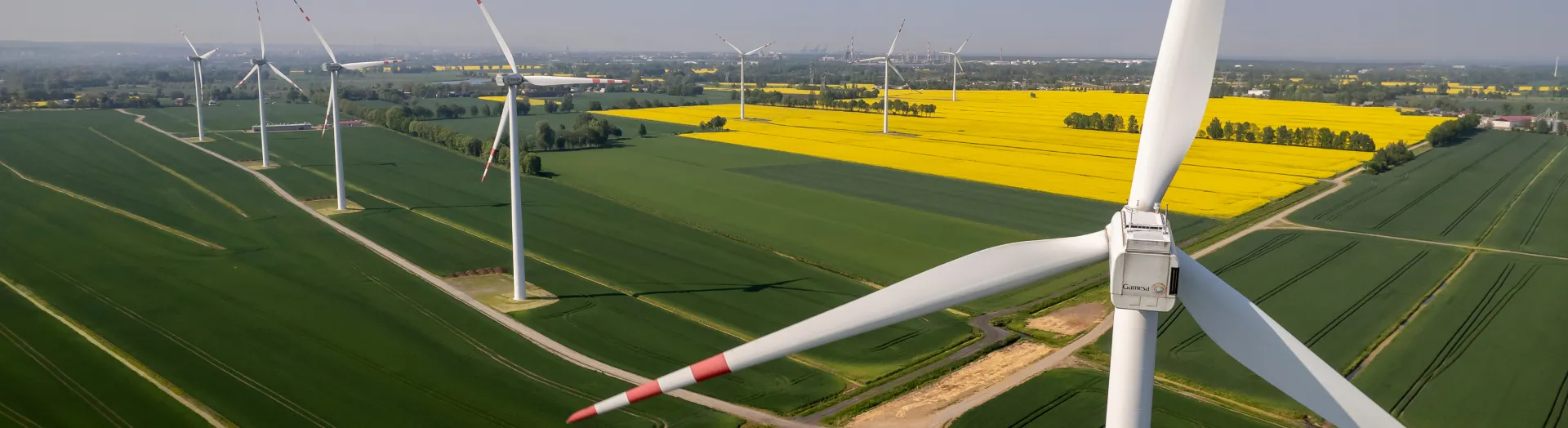
- ORLEN New Power implemented avoidance- and minimisation-level measures in its wind farm and solar PV projects. Renewable energy sources constructed by the company are an alternative to high-carbon power generation assets. At solar PV farms, solutions were used to enable the safe movement of small animals under fencing. During the operational phase, vegetation mowing was carried out outside the bird breeding season, and during the breeding season only under the supervision of an ornithologist. Bird and bat monitoring was conducted at wind farms, and selected sites used Bioseco bird detection systems to help reduce collision risk through light and sound signals.
- At the design stage of its projects, ORLEN Neptun implemented measures appropriate to the project development phase, such as incorporating environmental requirements into contracts with survey contractors, requiring the identification of environmental impact mitigation measures and their approval by HSE/environmental functions, as well as implementing and verifying compliance with environmental decision conditions. Oversight of these measures was exercised by HSE/Environment teams.
- Geofizyka Toruń S.A. operated in accordance with environmental impact assessments and environmental baseline studies, using low-ground-pressure equipment, precise route planning and supervision by QHSE teams. The company has indicated that its activities are temporary in nature and do not result in permanent biodiversity loss; therefore, its measures focused on avoiding and minimising impacts.
Our restoration, reclamation and remediation actions consisted in restoring the natural or functional value of areas that have been temporarily or locally transformed.
- Following the completion of drilling operations, ORLEN Upstream Polska routinely restores temporarily occupied land so that it can be returned to agricultural use. This includes dismantling infrastructure, restoring landform, spreading topsoil, and applying agrotechnical treatments such as cultivation, harrowing, fertilisation and seeding. Completion of restoration is in each case confirmed by a decision of the competent county governor.
- ORLEN Aviation continued remediation measures related to a 2024 incident on its Katowice site, which resulted in local soil contamination over an area of approximately 30 m² outside an area of high biodiversity value. In the first stage, in situ remediation was applied, with the option of moving to ex situ remediation if the required outcomes were not achieved.
- ORLEN Termika S.A.’s actions included both minimisation and restoration elements, such as replacement planting, land remediation and conducting environmental baseline studies of its sites. The company also prepared an assessment of the impacts of water withdrawal and discharge on the ichthyofauna of the Vistula River and its tributaries, together with a plan of preventive and compensation measures.
As regards compensation and offsetting measures, we implemented actions in accordance with the formal and legal conditions, in particular where they resulted from administrative decisions or regulatory requirements.
Another important category of actions was active conservation measures and the restoration of ecosystem functions:
- ORLEN S.A. organised conservation activities in the coastal salt marsh ecosystem within Wolin National Park and in Natura 2000 sites: Delta Świny and Wolin and Uznam. The activities included mowing salt meadows and removing biomass across 110 hectares, in addition to extensive grazing. The works were conducted outside the bird breeding season and in line with Park guidelines to limit vegetation succession and preserve suitable conditions for protected species. Costs incurred in 2025 amounted to PLN 150,000 thousand, VAT exclusive.
- The Energa Group undertook a range of actions to support biodiversity, including monitoring of avifauna and ichthyofauna, fish restocking, landfill restoration, tree planting, sowing of flower meadows, as well as training and local environmental initiatives. The company was not subject to formal biodiversity compensation obligations. Energa Wytwarzanie has for many years invested in the construction of fish passes at hydropower plants. Currently, 13 small hydropower plants are equipped with fish passes: Drzeżewo, Borowo, Wojdyty, Kotowo, Łyna, Brąswałd, Braniewo, Rakowiec, Rościno, Smołdzino, Biesowice and Skarszów Dolny. Most recently, a fish pass was constructed at the Skarszów Dolny small hydropower plant on the Skotawa River, in the buffer zone of the Dolina Słupi Landscape Park. The facility was commissioned in 2024. Due to the costs involved, the company intends to seek external funding. In 2014–2025, PLN 1,312,915.55 was allocated to fish stocking, including PLN 143,739.50, VAT exclusive, in 2025. The species stocked included brown trout fry, sea trout and eel. The company cooperates with external partners, for instance with the Inland Fisheries Institute on eel monitoring and with organisations in the Parsęta river basin on the capture and restitution of migratory fish.
Actions implemented in 2025 indicate that we focused primarily on preventing and reducing impacts at source, and then, where necessary, on restoration, reclamation or remediation. Compensation was used as a supporting measure where required under decisions of the competent authorities or applicable regulations. We did not undertake any biodiversity offsetting activities.
Selected educational and grant initiatives implemented by the ORLEN Foundations in 2025:
- The ORLEN Foundation for Pomerania awarded nearly PLN 4 million to nine beneficiaries under the first edition of the Vistula Biodiversity Grant programme. Grants of up to PLN 500,000 supported initiatives protecting valuable ecosystems of the Vistula River and its tributaries. The programme was open to NGOs, research institutions, schools and local authorities.
- The ORLEN Foundation for Pomerania transferred PLN 4 million to ten beneficiaries under the first edition of the Baltic Biodiversity Grant programme. Grants of up to PLN 500,000 per project financed initiatives protecting biodiversity in coastal and marine areas of the Baltic Sea. Eligible participants included NGOs, research institutions, schools, local governments, associations, foundations and community organisations.
- The ORLEN Foundation has initiated a three-year partnership with UNEP/GRID Warsaw to support the Birds of Prey Conservation Programme in Poland, covering five raptor species: the golden eagle, white-tailed eagle, lesser spotted eagle, osprey and peregrine falcon. The programme includes population monitoring, release of young birds, installation of telemetry transmitters, and extensive educational and research activities, covering up to 90% of the national populations of certain species.
- Antarctica under ORLEN’s Wing is a research and education initiative aiming to establish a new Antarctic Specially Protected Area. Currently, strictly protected areas account for only 0.02% of the region. Initiated in 2025, the project is intended to lead to the designation of an additional protected area, increasing the extent of protected zones and strengthening Poland’s international position in Antarctic research. It is a joint initiative of ORLEN S.A., the ORLEN Foundation and the Institute of Biochemistry and Biophysics of the Polish Academy of Sciences.
- Following a PLN 3.5 million donation from the ORLEN Foundation and the execution of a notarial deed, the area of Magura National Park was expanded by 50 hectares, supporting the protection of the golden eagle, one of Poland’s rarest birds of prey.
- The ORLEN Foundation for Pomerania awarded 38 grants, totalling approximately PLN 3.3 million, under the Climate Adaptation for Northern Poland programme. The initiatives that benefitted from the Foundation’s financing included measures fostering biodiversity, such as the creation of a pocket forest in Łeba and educational projects on water management in the Żuławy area, supporting the protection of local ecosystems and enhancing their resilience to climate change.
Targets related to biodiversity and ecosystems [E4-4]
In 2025 the Group has not set any measurable quantitative objectives connected with biodiversity and ecosystems. The ORLEN Group ambitions relating to biodiversity and ecosystems are set out in the Biodiversity Policy and in the ORLEN Group Sustainable Development Strategy for 2025–2035. The ambitions were developed on the basis of the EU Biodiversity Strategy for 2030, the EU Taxonomy, and the UN Sustainable Development Goals and cover planning of new projects, as well as existing operations and immediate surroundings. Once the Biodiversity Action Plan (BAP) is implemented, the Group plans to prepare specific initiatives for Group companies. Ambitions related to biodiversity and ecosystems have been defined in the Sustainable Development Strategy, under which we have established the following milestones:
by 2026 – development of the Biodiversity Action Plan (BAP) for the ORLEN Group, including:
- calculation of ORLEN S.A.’s biodiversity footprint,
- integration of biodiversity protection into the ORLEN Group’s internal strategic decision-making processes;
by 2030 – implementation of BAP across the ORLEN Group:
- further action to halt biodiversity loss and compensate for the ORLEN Group’s biodiversity impacts;
- avoidance of siting of new projects within areas covered by special protection measures.
by 2050 – achievement of a net-positive biodiversity impact for new assets.
These targets are supported by the principles set out in our Biodiversity Policy, in particular by integrating biodiversity protection into decision-making processes, applying the mitigation hierarchy, and pursuing actions to support biodiversity in areas where we operate. Some of the targets are currently high-level and implementation-oriented, with further operationalisation, including the development of metrics, baselines and progress monitoring, planned as part of the preparation and implementation of the Biodiversity Action Plan.
Targets at the level of ORLEN Group companies
In 2025, Polska Spółka Gazownictwa (PSG) developed and implemented the PSG Environmental Protection Policy, under which it established the objective of protecting and enhancing biodiversity. This objective will be pursued from 2026 onwards across the company’s area of operations. At this stage, it has not yet been based on environmental thresholds, but it remains aligned with the directions set by the EU Biodiversity Strategy for 2030.
IKS Solino adopted an objective of prioritising biodiversity protection at all levels of its operations and investments. This includes integrating biodiversity considerations into the project lifecycle and the supply chain, ongoing monitoring of investments, and raising employee awareness.
ORLEN Neptun did not set separate quantitative biodiversity targets in 2025. The company intends to develop measurable targets when the Baltic East and Baltic West projects move into construction and operational phases and environmental monitoring is launched.
Under the 2025 Environmental Objectives approved by its Management Board, ORLEN Termika S.A. intends to assess biodiversity on its sites and to develop biodiversity action plans by 2030. This objective will be delivered through a range of actions including environmental baseline studies, assessment of impacts on ichthyofauna, and preparation of an action plan.
Other Group companies did not identify any additional targets related to biodiversity and ecosystems.
Impact metrics related to biodiversity and ecosystems change [E4-5]
Locations in or near biodiversity-sensitive areas
Scope of assets: the analysis covered only active ORLEN Group facilities located in Poland; decommissioned assets and those at the pre-operational stage were excluded. Source of geospatial data on protected areas: public geospatial data from the General Directorate for Environmental Protection (GDOŚ) (Central Register of Forms of Nature Protection, data as at 6 May 2025). For sites located near biodiversity-sensitive areas (with proximity calculated from the asset boundary), 100 m and 2 km buffers were applied. Where the same protected area interfaced with more than one asset, it was counted only once in the lists (as a single location). Interfacing with locations near biodiversitysensitive areas identifies the potential range of impact (proximity pressure) calculated from the asset and does not in itself mean that a negative impact on habitats or species has been identified.
| Category of protected area | Sites interfacing with locations in biodiversity-sensitive areas | Sites interfacing with locations near biodiversity-sensitive area | |
|---|---|---|---|
| 100 m buffer | 2,000 m buffer | ||
| Wildlife corridors | 43 | 46 | 111 |
| Protected landscape areas | 45 | 56 | 141 |
| Natura 2000 Special Protection Areas | 21 | 27 | 64 |
| Landscape parks | 25 | 26 | 55 |
| National parks | 3 | 5 | 9 |
| Ramsar areas | 0 | 1 | 5 |
| Nature reserves | 1 | 4 | 73 |
| Natura 2000 Special Areas of Conservation | 26 | 32 | 150 |
| Documentation sites | 0 | 0 | 64 |
| Ecological sites | 1 | 5 | 198 |
| Nature and landscape complexes | 2 | 2 | 39 |
| Category of protected area | Area of sites interfacing with locations in biodiversity-sensitive areas | Area of sites interfacing with locations near biodiversity-sensitive areas | |
|---|---|---|---|
| 100 m buffer | 2,000 m buffer | ||
| Wildlife corridors | 407.69 | 849.36 | 101,093.36 |
| Protected landscape areas | 71.53 | 635.98 | 101,324.51 |
| Natura 2000 Special Protection Areas | 93.47 | 422.25 | 58,511.26 |
| Landscape parks | 140.49 | 641.1 | 67,592.90 |
| National parks | 16.45 | 49.4 | 8,501.21 |
| Ramsar areas | - | 0.66 | 1,786.77 |
| Nature reserves | 0.27 | 12.65 | 2,982.02 |
| Natura 2000 Special Areas of Conservation | 29.99 | 247.19 | 48,494.05 |
| Documentation sites | - | - | 7.8 |
| Ecological sites | 0.00 | 5.97 | 1,670.52 |
| Nature and landscape complexes | 0.44 | 9.78 | 4,311.72 |
| Total | 760.33 | 2,874.34 | 396,276.12 |
| Category of protected area | Sites interfacing with locations in biodiversity-sensitive areas | Sites interfacing with locations near biodiversity-sensitive area | |
|---|---|---|---|
| 100 m buffer | 2,000 m buffer | ||
| Wildlife corridors | 49 | 52 | 108 |
| Protected landscape areas | 71 | 88 | 123 |
| Natura 2000 Special Protection Areas | 21 | 35 | 68 |
| Landscape parks | 58 | 69 | 79 |
| National parks | 7 | 9 | 12 |
| Ramsar areas | 0 | 0 | 4 |
| Nature reserves | 0 | 2 | 53 |
| Natura 2000 Special Areas of Conservation | 12 | 38 | 135 |
| Documentation sites | 0 | 0 | 5 |
| Ecological sites | 0 | 2 | 82 |
| Nature and landscape complexes | 1 | 4 | 18 |
| Category of protected area | Area of sites interfacing with locations in biodiversity-sensitive areas | Area of sites interfacing with locations near biodiversity-sensitive areas | |
|---|---|---|---|
| 100 m buffer | 2,000 m buffer | ||
| Wildlife corridors | 224.00 | 582.89 | 99,848.69 |
| Protected landscape areas | 92.20 | 712.52 | 133,717.44 |
| Natura 2000 Special Protection Areas | 123.54 | 246.96 | 64,546.00 |
| Landscape parks | 70.74 | 637.98 | 124,577.34 |
| National parks | 6.02 | 70.68 | 14,949.91 |
| Ramsar areas | - | - | 542.48 |
| Nature reserves | - | 1.11 | 2,273.23 |
| Natura 2000 Special Areas of Conservation | 7.23 | 106.41 | 46,513.25 |
| Documentation sites | - | - | 12.87 |
| Ecological sites | - | 0.75 | 461.62 |
| Nature and landscape complexes | 0.90 | 9.03 | 2,014.98 |
| Total | 524.63 | 2,368.33 | 489,457.81 |
Land use information
This section presents area-based metrics illustrating the impact of our operations on land use and land condition in areas under ORLEN Group’s management. The metrics cover sealed areas, biologically active areas, areas transformed during the reporting year and degraded areas. A description of the types of degradation is also provided, where it has been specified by Group companies.
| Category | Area (ha) |
|---|---|
| Area under management | 39,369.53 |
| Sealed area | 22,053.86 |
| Biologically active area | 12,722.02 |
| Area transformed in the reporting year | 21.27 |
| Degraded area | 235.99 |
| Type of degradation [open-pit mining / contamination / landfill] [only if an area is reported under category 4] |
Energa Group – landfill;
ORLEN Aviation, ORLEN Oil, ORLEN Paliwa – contamination; ORLEN Upstream Polska – well mining; ORLEN Południe – includes the area of the open pit, heavily contaminated and polluted land, storage sites for solid waste, liquid waste, and mining overburden, and similar areas requiring reclamation. |
As a TNFD Adopter, ORLEN S.A. has committed to implementing the TNFD recommendations and including TNFD’s recommended disclosures in its non-financial reporting. The concordance table below shows how the individual TNFD recommendations have been reflected in this Sustainability Statement, with cross-references to the relevant ESRS components.
| TNFD’s recommended disclosure | ESRS disclosure | Section of this Sustainability Statement |
|---|---|---|
| Governance A |
ESRS 2 GOV-1, GOV-2, GOV-3, GOV-5 | 1.1.3, 1.1.4, 1.1.5, 1.1.7 |
| Governance B |
ESRS 2 GOV-1, GOV-2, IRO-1, MDR-P | 1.1.3, 1.1.4, 1.1.5, 1.1.7, 1.1.12 |
| Governance C | ESRS E4-1, 17e | 1.6.1 |
| Strategy A | ESRS E4-1, 16a | 1.6.1 |
| Strategy B |
ESRS E4-2, 20, 23d
ESRS E4-3, 25, 28a ESRS E4-4, 32 | 1.6.2, 1.6.3, 1.6.4 |
| Strategy C | ESRS E4-1, 13 | 1.6.1 |
| Strategy D | ESRS E4-1, 16a, 17, 19 | 1.6.1 |
| Risk and impact management A(I) | ESRS E4-1, 17ab | 1.6.1 |
| Risk and impact management A(II) | ESRS E4-1, 17ab | 1.6.1 |
| Risk and impact management B | ESRS E4-2, 20 | 1.6.2 |
| Risk and impact management C | ESRS 2, IRO-1 | 1.1.12 |
| Metrics and targets A | ESRS E4-5, 35, 38 | — |
| Metrics and targets B | — | 1.6.5 |
| Metrics and targets C | — | — |