'%3e%3cpath%20d='M72%200H0V72H72V0Z'%20fill='%23D81E04'/%3e%3cpath%20d='M16.656%2048.9837C13.5894%2048.9837%2011.0957%2051.4736%2011.0957%2054.5308C11.0957%2057.5879%2013.5875%2060.0797%2016.656%2060.0797C19.7244%2060.0797%2022.1917%2057.5784%2022.1917%2054.5308C22.1917%2051.4831%2019.6999%2048.9837%2016.656%2048.9837ZM16.656%2056.7087C15.4498%2056.7087%2014.4667%2055.7294%2014.4667%2054.5308C14.4667%2053.3321%2015.4498%2052.3528%2016.656%2052.3528C17.8622%2052.3528%2018.8302%2053.3321%2018.8302%2054.5308C18.8302%2055.7294%2017.8376%2056.7087%2016.656%2056.7087ZM54.0881%2049.2446H50.8306V59.7961H54.1335V55.8863C54.1335%2055.4609%2054.1297%2054.9013%2054.0257%2054.2226L57.6349%2059.798H60.9056V49.2465H57.6046V53.0088C57.6046%2053.4664%2057.6179%2054.0241%2057.7143%2054.6877L54.0881%2049.2465V49.2446ZM43.5404%2023.2733L48.628%2028.361C50.7852%2030.5068%2054.7668%2030.798%2057.3381%2028.2456L48.5184%2019.426L47.9758%2018.8871C45.8186%2016.7394%2042.9297%2015.5332%2039.8859%2015.5332H31.6485C28.0393%2015.5332%2024.9576%2018.1895%2024.4623%2021.7571H39.8915C41.266%2021.7571%2042.5724%2022.294%2043.5404%2023.2715V23.2733ZM32.4879%2024.3397C32.4879%2025.9977%2033.8359%2027.3457%2035.494%2027.3457C37.1521%2027.3457%2038.5001%2025.9996%2038.5001%2024.3397C38.5001%2023.8008%2038.3583%2023.2658%2038.0728%2022.7969H32.9057C32.6335%2023.2658%2032.4879%2023.8008%2032.4879%2024.3397ZM33.6979%2049.2446V59.7961H40.6988V56.928H37.3789V49.2465H33.6979V49.2446ZM21.2577%2029.0208H24.2354C25.2998%2029.0208%2026.3869%2029.4727%2027.1507%2030.2289L41.249%2044.3309C43.6784%2041.9147%2043.6784%2037.9293%2041.249%2035.5094L31.6315%2025.8899C29.6671%2023.9199%2027.0373%2022.7969%2024.2619%2022.7969H23.3582C19.9078%2022.7969%2017.1267%2025.5875%2017.1267%2029.0359C17.1267%2030.382%2017.5275%2031.4181%2018.2119%2032.5581C17.9605%2030.7167%2019.3917%2029.0208%2021.2558%2029.0208H21.2577ZM45.2344%2055.6008H47.4634V53.1525H45.2344V51.8215H49.3597V49.2427H41.8332V59.7942H49.6981V56.9262H45.2344V55.6008ZM29.8505%2055.4969C31.0397%2055.357%2031.8262%2054.3096%2031.8262%2052.8027C31.8262%2050.5473%2030.4158%2049.2446%2027.6801%2049.2446H23.3639V59.7961H26.6667V56.3079L28.459%2059.7961H32.5919L29.8505%2055.4969ZM27.3039%2054.1451H26.6667V51.8518H27.3039C28.1074%2051.8518%2028.5233%2052.2998%2028.5233%2053.0202C28.5233%2053.7405%2028.0866%2054.1451%2027.3039%2054.1451Z'%20fill='white'/%3e%3c/g%3e%3cdefs%3e%3cclipPath%20id='clip0_477_203'%3e%3crect%20width='72'%20height='72'%20fill='white'/%3e%3c/clipPath%3e%3c/defs%3e%3c/svg%3e)
- Home
- Sustainability Statement
- Environment and Climate
- Water and Marine Resources [ESRS E3]
Water and Marine Resources [ESRS E3]
Double materiality assessment summary for water and marine resources[E3.IRO-1]
| Segment | Area | Geographical region |
E3 Risk, opportunity, impact name |
Impact (I)
Risk (R) Opportunity (O) |
Positive (+)
Negative (-) |
Actual (A)
Potential (P) |
Value chain
Organisation (O) Downstream (D) Upstream (U) |
|---|---|---|---|---|---|---|---|
|
Upstream & Supply,
Downstream, Energy, Consumer & Products |
Refining;
Upstream; Energy; Petrochemicals; Gas | Europe + North America | Water consumption Water consumption in operational processes | I | - | A | O,U |
| Water withdrawal Water withdrawal for operational processes | I | - | A | O,U | |||
| Increased costs of water purchase / water use | R | O,U | |||||
| Water discharge Wastewater discharge from operations | I | - | A | O | |||
| Rising costs to implement measures to reduce water discharge volumes or alter water discharge methods | R | O |
| short-term | medium-term | long-term | |||||
|---|---|---|---|---|---|---|---|
| Water withdrawals | R | - | ✔ | ✔ | |||
| Water discharges | R | - | ✔ | ✔ |
In our operations, we use a comprehensive water and marine resources management system that integrates regulatory requirements with operational solutions tailored to the local context of each installation. The system covers the full water use cycle – from withdrawal, through consumption and process circulation, to discharge, retention and reuse. Processes are conducted in accordance with applicable water and integrated permits, and are subject to regular monitoring under formal compliance programmes. Our operations are materially dependent on the availability of water resources of sufficient volume and quality. The most water intensive segment of our operations in Energy. Significant water volumes are also used in the Refining, Petrochemicals and Consumers & Products segments, including in car wash operations.
In the area of water and marine resources, we identified impacts, risks and opportunities related to our operations and the transition to a more efficient business model in relation to water consumption, withdrawals from surface water, groundwater and seawater, as well as wastewater discharge. Our impacts are managed by using water treatment technologies, reducing pollutant loads in line with relevant permits, and monitoring quantitative and qualitative parameters. Our key impacts relate to water consumption in operations. These are actual impacts, occurring mainly in our own operations.
Upgrades to our assets undertaken to meet new environmental requirements, including the replacement of highly water-intensive facilities, create opportunities to reduce water-related costs. We focus on identifying and implementing solutions whose outcomes can be verified through operational data.
We have assessed our exposure to water-related risks, including areas of significant water scarcity, using available analytical tools and environmental data, in particular the WRI Aqueduct Water Risk Atlas.
As at the reporting date, we identified operations in areas of high water stress. In addition, in selected locations, other risks are present (e.g. flood risk and water protection areas in Austria; surface water withdrawals in the Czech Republic/Elbe catchment), which are addressed through legal requirements applicable to design, construction and operation, as well as through compliance frameworks.
Stakeholder engagement, including with potentially affected communities, takes place primarily through formal procedures required by law, such as environmental impact assessments and environmental decision and water permitting processes. Based on available information, no additional standalone consultations focused exclusively on water resources were conducted during the reporting period.
Policies related to water and marine resources [E3-1]
ORLEN Group companies apply various water use models, including withdrawals from surface water and groundwater for process purposes, the purchase of water from external networks, the use of marine water, and the reduction of discharges through retention and recirculation of water streams within processes. At sites with low process intensity, water withdrawals are limited to domestic and fire protection purposes, while discharges consist of stormwater and snowmelt.
In 2025, we developed the ORLEN Group Water and Wastewater Management Policy, which further elaborates on the ORLEN 2035 Strategy, the ORLEN Group Sustainable Development Strategy and the European Water Resilience Strategy. The Policy defines the directions of action and resources required for responsible, sustainable and safe water use, with a particular focus on sites exposed to water risk.
These policies reflect applicable regulatory requirements at international, EU and national levels, as well as the technological and site-specific characteristics of each installation. Within our governance framework, policies are approved at management level, with their implementation overseen by designated organisational units. This includes water-related due diligence, environmental audits, training, oversight of water and integrated permits, and analysis of environmental incidents. As at the reporting date, all Group sites were covered by applicable policies.
In addition, we have a number of environmental procedures, instructions and internal orders in place, many of which apply to water resource management. They address in particular compliance with obligations arising from water and integrated permits for installations operated by Group companies.
Actions and resources related to water and marine resources [E3-2]
Depending on the local context, we apply different water use models, including withdrawals from surface water and groundwater, external sourcing, the use of marine water, and the reduction of discharges through retention and recirculation within processes. At sites with low process intensity, water withdrawals are limited to domestic and fire protection purposes, while discharges mainly consist of stormwater and snowmelt. Operational principles focus on reducing water consumption, improving efficiency and recirculation, implementing Best Available Techniques, preventing pollution, and adopting a risk-based approach. Water treatment is aligned with the pollution profile, and wastewater is directed to authorised treatment facilities. The management system ensures compliance with applicable water and integrated permits and is supported by local operating procedures, quantitative and qualitative monitoring, environmental audits, incident analysis and, at selected sites, EMAS, ISO 14001 and ISO 50001 systems. Roles and responsibilities for compliance, reporting and risk escalation are assigned at management level, with oversight based on harmonised data standards, review schedules and clearly designated process owners.
We implement water management actions tailored to the location and nature of our operations on an ongoing basis. These include:
- optimising water withdrawals through water balancing and reducing freshwater use where alternative sources are available;
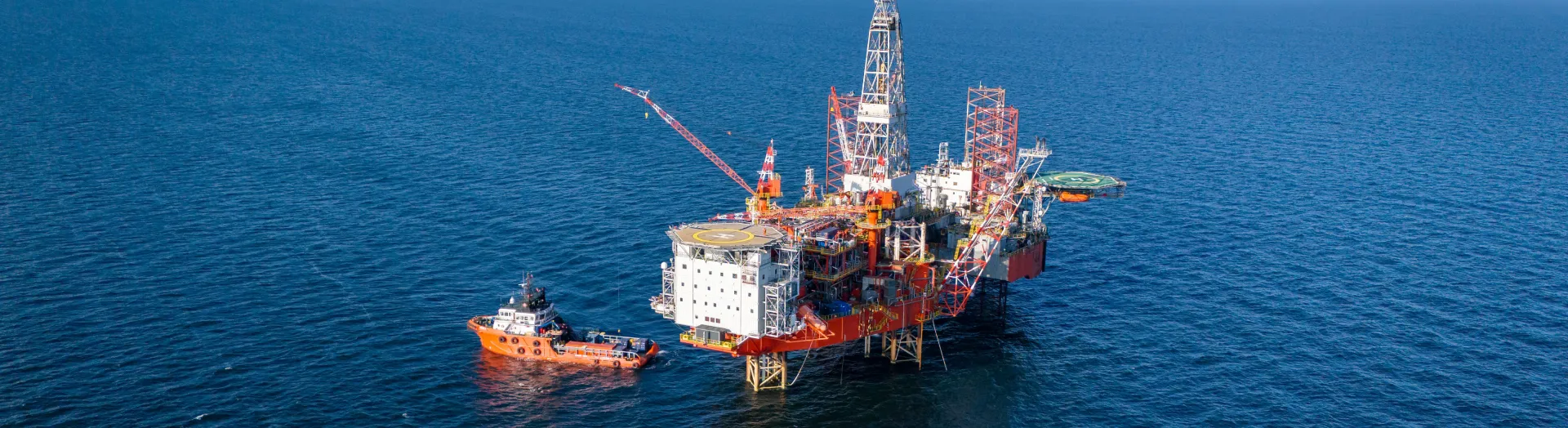
- using marine water for equipment cooling and reservoir injection; the monitoring of impacts and water quality has confirmed no negative impact on the receiving water body; the volumes of extracted reservoir fluids are balanced by water injection;
- implementing closed-loop systems, recirculation and reuse;
- pre-treating and managing stormwater and snowmelt;
- applying Best Available Techniques and upgrading water and wastewater treatment systems;
- conducting continuous and periodic monitoring of the quantity and quality of water withdrawn and discharged, in line with relevant permit conditions;
- implementing preventive measures and environmental incident response procedures;
- using marine water in technological processes exclusively within the scope allowed by applicable permits and supported by impact monitoring;
- taking operational measures informed by stakeholder engagement across the value chain, including its upstream and downstream segments;
- applying procedural and organisational measures within the Integrated Management System, including setting environmental objectives and actions at the level of individual Group companies;
- implementing technical solutions such as recirculation, alternative water sourcing and resource efficiency technologies;
- implementing educational initiatives to raise employee awareness of sustainability and water conservation.
Those actiones are focused on the Group’s operations.
Actions in areas at water risk
Each form of the ORLEN Group’s operations in areas with high water stress has been identified and is monitored. Our actions and resource allocation are aligned with local hydrological conditions, the nature of operations and the scale of potential impacts. Where required, we take remedial measures to reduce water consumption and minimise negative impacts on local water resources, including through actions to improve the efficiency of water and wastewater processes. In particularly vulnerable areas, we conduct regular risk reviews and carry out business continuity plans, taking into account the potential effects of climate change.
Investment projects – product and service design
Water intensity is one of the aspects we consider in our development processes. Technologies and process solutions are designed to reduce water demand during the use phase and across the value chain.
Investment projects are preceded by environmental impact assessments and, where required, field studies. Environmental documentation is submitted to competent authorities and disclosed to affected communities and other stakeholders in accordance with applicable procedures. For projects or initiatives with a potential impact on local water resources, we engage with stakeholders, including public authorities and local communities, as part of formal administrative procedures. This engagement takes place through environmental impact assessments and water permitting processes.
Product and service design to address water-related challenges includes:
- designing with due regard for water resources, including reducing water demand during use and servicing;
- process solutions enabling water reuse and reduced water withdrawals at user level and across the value chain (e.g. recovery of condensate and wash water);
- innovation and digitalisation, including remote measurement and automated control of loads and quality.
In practice, we implement solutions to minimise environmental impacts, including closed-loop systems, stormwater pre-treatment and management, and technologies that reduce water use in welfare and amenity facilities. In the Retail segment, particularly in car wash operations, treatment and recycling systems are used to reduce freshwater withdrawals; more than 91% of our car washes are equipped with water treatment systems, and pilot digital water meters are being introduced at selected sites to improve data quality. In our industrial operations, initiatives focus on optimising water use, upgrading water and wastewater infrastructure, and reducing water losses.
In several areas, new projects have been implemented to develop closed-loop and water reuse systems, including:
- recovery and reuse of process water;
- production of utility water from treated wastewater;
- use of steam condensate and process water as inputs for other process units;
- implementation of recirculation and filtration systems;
- design and construction of water recirculation systems, including under EPC arrangements;
- use of greywater systems in sanitary installations;
- retention of stormwater for maintaining green areas;
- closing selected process loops to reduce freshwater withdrawals.
We incurred the following operating costs in relation to water and wastewater management actions at ORLEN Group facilities:
- operating expenditure on water recovery and reuse, including maintenance of circular economy systems;
- operating costs related to monitoring, analysis and regulatory compliance;
- expenditure on retention infrastructure and water reuse systems.
These costs include technological upgrades, filtration systems, water retention, remediation and closed-loop systems.
In the period covered by our Sustainable Development Strategy, i.e. by 2035, we intend to complete projects related to wastewater treatment plants. The Termika Group plans to construct facilities for recovering heat from municipal wastewater and cooling water. Total expenditure on these investments over the period to 2035 will amount to PLN 3,904 million.
In 2025, ORLEN S.A.’s water-related expenditure was mainly operating expenditure and totalled PLN 14.8 million. We identified no capital or operating expenditure within the ORLEN Group dedicated exclusively to areas of significant water scarcity.
Collective actions and stakeholder engagement
Given the shared nature of water resources, we implemented certain actions in collaboration with:
- suppliers of water and wastewater technologies;
- contractors, including EPC contractors;
- public authorities and environmental inspection bodies;
- entities responsible for monitoring and laboratory analysis;
- industry partners and system operators;
- service providers using water recycling solutions.
Targets related to water and marine resources [E3-3]
We have not defined measurable targets to assess our progress in the area of water and marine resources. We seek to optimise water consumption within the ORLEN Group in accordance with the Sustainable Development Strategy for 2025–2035.
Furthermore, we pursue strategic objectives focused on reducing water-related impacts, in particular:
- calculating the water footprint of ORLEN S.A. by the end of 2026;
- calculating the water footprint of the ORLEN Group by 2030;
- reducing water consumption where technologically feasible;
- increasing recirculation and reuse;
- developing water replenishment plans for water-scarce areas;
- advancing circular economy practices, including closing water loops (e.g. through car wash upgrades).
In 2025, we initiated a project (Phase 0) to prepare for the calculation of our water footprint. It included workshops, the definition of scope and methodology, and the selection of an expert partner to provide validation and methodological support. For 2026, we plan detailed mapping of the Refining area of ORLEN S.A.’s production plant in Płock. It will include the identification of water withdrawal sources, water-using processes, consumption streams, discharges, storage, recirculation and the classification of water types. The project will provide a basis for a harmonised methodology for water footprint calculation at Group level.
From 2026, we plan to implement a consistent strategic approach to environmental policies, aligned with the ORLEN 2035 Strategy and the Sustainable Development Strategy for 2025–2035. The process will include:
- defining environmental objectives and implementation pathways;
- establishing measurable and monitorable key performance indicators (KPIs);
- monitoring progress in environmental policy implementation.
Water consumption [E3-4]
Data on water consumption across the ORLEN Group are based on direct measurements obtained from metering devices. The information is stored in dedicated IT systems. For reporting purposes, we define stored water as water kept exclusively for fire protection. Water levels in other process tanks are subject to variability, which makes it impossible to determine a fixed volume of retained water.
Water withdrawals [m3]
| Item | 2025 |
2024
(restated) |
2024
(as reported in the Sustainability Statement) |
|---|---|---|---|
| Total water withdrawals | 22,516,562,685 | 33,931,804,157 | N/A |
The significant decline in the amount of water withdrawn in 2025 was mainly attributable to lower water volumes withdrawn for energy generation at the ENERGA Group. The lower water intake by the hydroelectric power station in Włocławek in 2025 was due solely to the hydrological conditions of that year. For the River Vistula, it was a year of record-low water levels, which meant very low flows through the power station – flows that are its source of energy production.
Discharges of cooling water [m3]
| Item | 2025 |
2024
(restated) |
2024
(as reported in the Sustainability Statement) |
|---|---|---|---|
| Discharges of cooling water* | 559,717,593 | 515,481,703 | N/A |
Water/wastewater discharges by receiving environment [m3]
| Item | 2025 |
2024
(restated data) |
2024
(data as reported in the annual report) |
|---|---|---|---|
| Inland flowing waters | 22,464,968,388 | 33,884,512,144 | N/A |
| Marine waters | 1,798,343 | 1,802,340 | N/A |
| Ground | 178,556 | 238,994 | N/A |
| Third-party sewerage system | 3,131,119 | 3,201,719 | N/A |
| Total water/wastewater discharge volumes | 22,470,076,406 | 33,889,755,197 | N/A |
The significant decline in the amount of water/wastewater discharged to inland flowing waters in 2025 was mainly attributable to lower water volumes withdrawn for energy generation at the ENERGA Group. It is primarily due to a reduction in water withdraws in 2025 for the purpose of electricity production at hydroelectric power stations.
Volume of water stored [m3]
| Item | 2025 |
2024
(restated) |
2024
(as reported in the Sustainability Statement) |
|---|---|---|---|
| Volume of water stored | 7,401,431 | 10,289,224 | 10,547,051.19 |
Water consumption [m3]
| Item | 2025 | 2024 (restated data) | 2024 (data as reported in the annual report) |
|---|---|---|---|
| Total water consumption | 53,471,627 | 57,019,737 | 49,107,180.25 |
| Total water consumption in areas at water risk, including areas of high water stress** | 45,835 | 46,462 | 8,097,883.38 |
| Total water recycled and reused | 7,858,706 | 7,108,469 | 7,670,839.75 |
| Water intensity* [m3/EUR 1 million] | 845.96 | 832.27 | 716.56 |
| Water intensity* [m3/PLN 1 million] | 199.65 | 193.36 | 166.53 |
The significant decline in water consumption in 2025 was mainly attributable to the limited operation of SPOLANA and PARAMO plants in the Unipetrol Group.